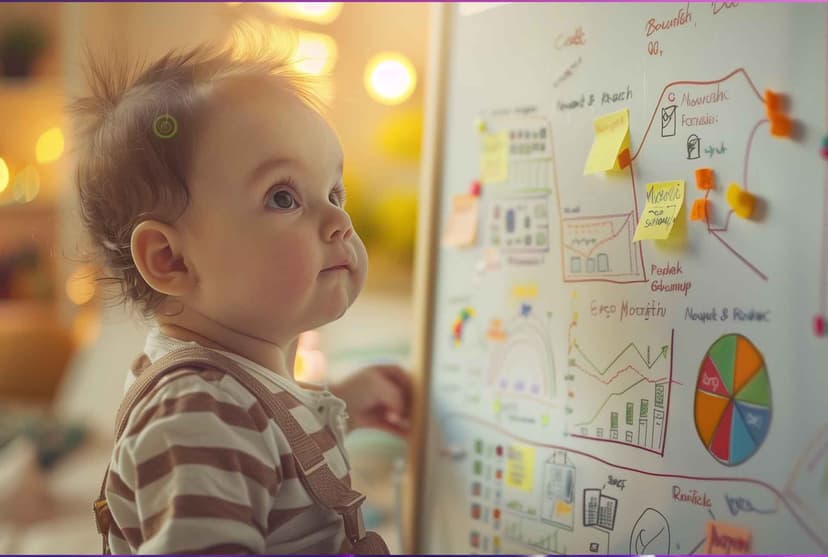



Everyone Is Talking About AI in Marketing. Most of It Is Noise.
Open any marketing newsletter and you will see the same headlines. AI is revolutionizing marketing. AI will replace your entire team. AI can generate a month of content in five minutes.
Some of this is true. Most of it is wildly exaggerated. And for small business owners trying to figure out what actually matters, the noise makes it nearly impossible to separate signal from hype.
AI in marketing is real. It is already changing how businesses generate leads, communicate with customers, and optimize their ad spend. But the tools that produce genuine results for small businesses are not the flashy ones that dominate the headlines.
This guide cuts through the hype. We will cover what AI tools actually work for local businesses, what is still more promise than reality, and where to invest your time and money right now.
Where AI in Marketing Delivers Real Results Today
These are the applications of AI that are producing measurable results for small businesses right now. Not in theory. Not in pilot programs. In daily operations.
AI Chatbots and Lead Capture
When a potential customer visits your website at 10 PM on a Sunday, nobody is there to answer their questions. An AI chatbot changes that. Modern chatbots understand natural language, answer common questions, capture contact information, and even book appointments. All without a human being involved.
The numbers are compelling. Businesses using AI chatbots report 30% to 50% more captured leads because the bot engages visitors who would otherwise leave without taking action. The bot works 24 hours a day, 7 days a week, and never forgets to ask for the customer's phone number.
This is not futuristic technology. It is available today and affordable for businesses of any size.
AI Powered Ad Optimization
Google Ads and Meta (Facebook/Instagram) both use AI extensively to optimize ad delivery. Google's Smart Bidding adjusts your bids in real time based on the likelihood of each click converting. Meta's Advantage campaigns use AI to find the audiences most likely to respond to your ad.
For small businesses, this means better results from the same ad budget. The AI processes thousands of signals (device, location, time of day, browsing history) that no human could analyze manually. Businesses that switch from manual bidding to AI optimized bidding typically see a 15% to 30% improvement in cost per conversion.
Automated Follow Up Sequences
AI powered CRM tools can predict which leads are most likely to convert and prioritize them for follow up. Some systems score leads based on their behavior (pages visited, emails opened, forms filled) and trigger different follow up sequences based on the score.
A hot lead gets an immediate phone call. A warm lead gets a nurture email sequence. A cold lead gets a monthly check in. The AI handles the sorting. Your team handles the conversations that matter.
Content Generation Assistance
AI writing tools can draft blog posts, email subject lines, social media captions, and ad copy. The quality varies, but for small businesses that struggle to produce any content at all, AI tools provide a starting point that human editors can refine.
The key word is assistance. AI generates the first draft. A human adds industry expertise, brand voice, local context, and fact checking. The combination is faster and more consistent than either approach alone.
Where AI in Marketing Is Still More Hype Than Reality
Not every AI marketing tool delivers on its promises. Here are the areas where the technology is still catching up to the sales pitch.
Fully Automated Content That Needs No Human Review
AI can write a blog post in 30 seconds. But the post will likely contain generic information, inaccurate claims, repetitive phrasing, and a voice that sounds like every other AI generated article on the internet. Google has stated that it evaluates content based on quality and helpfulness regardless of how it was created. Generic AI content ranks poorly.
For small businesses, the risk is publishing content that damages your credibility rather than building it. AI assisted content works. Fully automated, unreviewed content does not.
Predictive Analytics for Small Data Sets
Enterprise AI tools can predict customer behavior based on millions of data points. A small business with 200 customers does not have enough data for these predictions to be reliable. AI needs volume to identify patterns. With small data sets, the predictions are essentially guesses.
If a vendor tells you their AI can predict which of your 150 customers will churn next month, be skeptical. The math doesn't support it at that scale.
Replacement for Human Creativity and Strategy
AI is excellent at optimization and automation. It is not a replacement for understanding your customer, developing a brand voice, or crafting a marketing strategy. These require human judgment, empathy, and market knowledge that AI cannot replicate.
The businesses getting the best results from AI are the ones that use it to execute their strategy faster, not the ones trying to use it to create a strategy from scratch.
Practical AI Tools for Small Business Marketing
Here are specific tools worth considering. All are accessible to small businesses without enterprise budgets.
For Customer Communication
AI chatbots handle initial customer inquiries on your website. They qualify leads, answer FAQs, and capture contact information. Cloud3 builds custom AI chatbot solutions that integrate with your CRM and booking system.
For Email Marketing
AI powered email tools like Mailchimp and ActiveCampaign optimize send times, personalize subject lines, and predict which subscribers are most likely to engage. These features are included in most mid tier plans.
For Ad Management
Google's Performance Max campaigns and Meta's Advantage+ campaigns both use AI to optimize targeting and bidding. For small businesses spending $500 or more per month on ads, these AI features significantly improve return on ad spend.
For Content Creation
AI writing assistants help draft content faster. Use them for first drafts of blog posts, email sequences, and social media captions. Always edit for accuracy, voice, and relevance.
For Review Management
AI tools can monitor your online reviews, alert you to negative feedback, and suggest response templates. Some integrate with your CRM to automatically request reviews after completed services.

How to Start Using AI in Your Marketing
Start With One Problem
Do not try to implement five AI tools at once. Identify the one area where you are losing the most leads or spending the most time on repetitive work. Start there.
If you miss leads after hours, start with a chatbot. If your ad performance is mediocre, switch to AI optimized bidding. If you cannot keep up with content, use an AI writing assistant for first drafts.
Set Measurable Goals
Before implementing any AI tool, define what success looks like. "Capture 20% more leads per month." "Reduce cost per ad click by 15%." "Publish four blog posts per month instead of one." Measure against these goals at 30 and 90 days.
Keep the Human in the Loop
AI should make your team faster and more effective. It should not replace the human judgment, empathy, and expertise that customers value. Use AI for the repetitive, data heavy tasks. Keep humans on the creative, relational, and strategic work.
How Much Does AI Marketing Cost?
The good news is that most AI marketing tools are either built into platforms you already use or available at small business price points.
Free or included in existing tools: Google's AI bidding is free with Google Ads. Meta's Advantage campaigns are included. Most CRM platforms include AI lead scoring in their mid tier plans.
$50 to $200 per month: AI writing assistants, email optimization tools, and basic chatbot platforms. These cover the most common small business needs.
$200 to $1,000 per month: Advanced chatbots with custom training, AI powered review management platforms, and comprehensive marketing automation suites.
Custom solutions: For businesses that need AI tools integrated with their specific CRM, website, and booking system, custom development provides the best fit. The upfront cost is higher but the long term efficiency gains are significant.
The total cost of adding AI to your marketing depends on which problems you are solving. A small business that adds AI chatbot and automated email optimization might spend $150 per month and save 15 hours of staff time. That is a strong return.

The Future of AI in Marketing for Local Business
AI will continue getting better at the tasks it already does well. Chatbots will become more conversational. Ad optimization will become more precise. Content tools will produce higher quality drafts. Predictive analytics will become useful at smaller data scales.
The businesses that benefit most will be the ones that adopt AI tools thoughtfully and early. Not the ones that chase every trend, but the ones that identify specific problems and apply AI solutions to solve them.
The risk is not that AI will replace your marketing. The risk is that your competitors adopt AI tools before you do and operate faster, cheaper, and more effectively.