

Most owners do not have a channel problem. They have a sequencing problem.
You have a set marketing budget. Someone tells you SEO is the answer. Someone else swears by Google Ads. A third voice says you just need to post more. Each is right for a specific situation, and wrong for the rest.
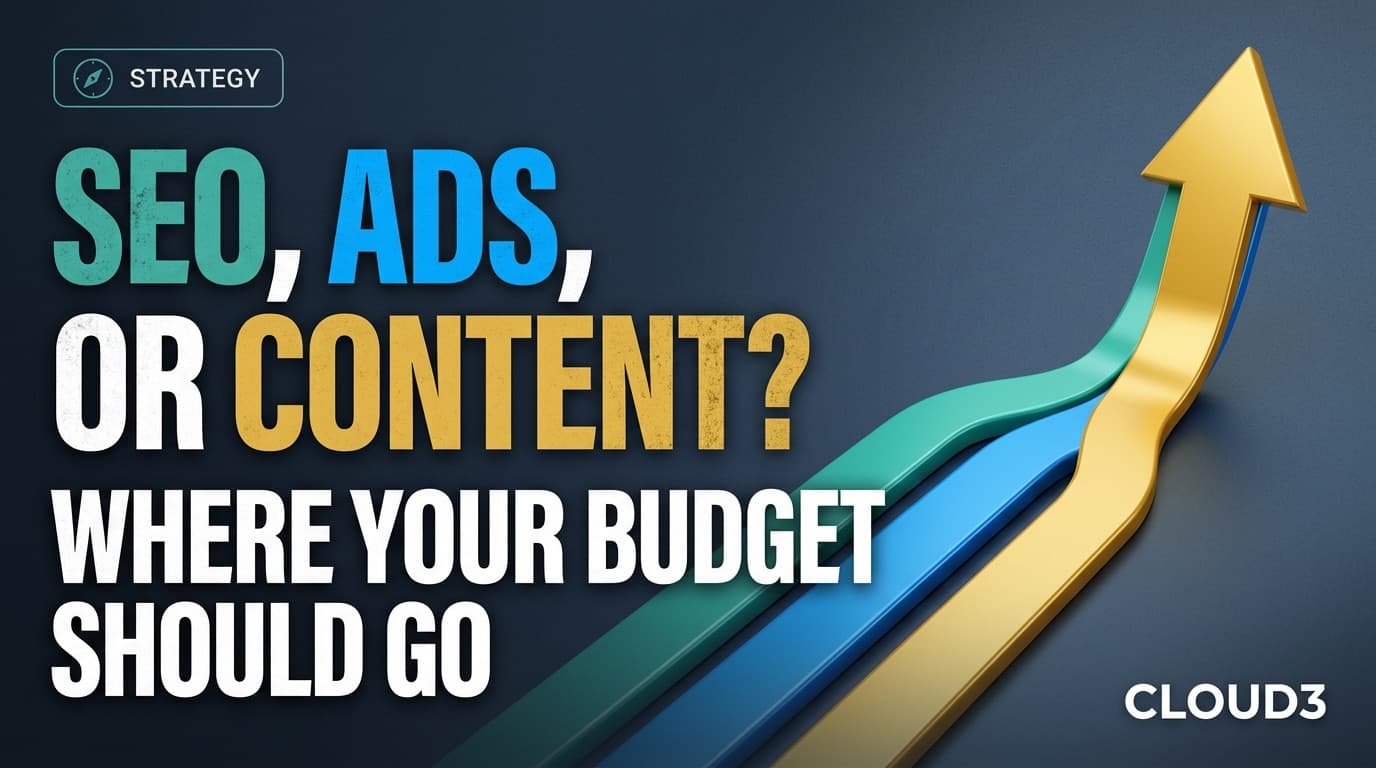
Roughly half of all clicks on a search results page go to organic listings, yet paid ads still capture buyers at the exact moment they are ready to call. Both facts are true. The question is not which channel is best. It is which channel fits your timeline, your margins, and your stage of business right now.
This guide gives you a decision framework for service business lead generation in Toronto, so your next dollar goes where it actually pays back.
Start With Four Questions, Not Three Channels
The channel is the last decision, not the first. Before you compare SEO, ads, and content, answer four questions about your business.
How fast do you need leads? If the answer is this month, that rules some options out immediately.
What is a customer worth? A roofer closing $12,000 jobs can absorb a $90 ad click. A cafe cannot.
How much can you commit monthly, and for how long? Some channels need six months before they earn. Others bill you on day one and deliver on day one.
Where does your buyer look when they have your problem? A burst pipe sends someone to Google in a panic. A kitchen renovation gets researched for weeks across Instagram and Pinterest.
Write down your answers. Timeline, customer value, budget runway, and buyer behaviour. These four inputs decide the channel far better than any trend does. Everything below maps back to them.
When SEO Wins
SEO wins when you can wait, and when your service has steady search demand.
Search engine optimization is a compounding asset. You invest in a fast website, clear service pages, local citations, and a strong Google Business Profile. It takes time. Most local campaigns need three to six months before rankings move meaningfully.
Then the math flips in your favour. Once you rank, leads arrive without a per-click cost. Your cost per lead drops month over month while paid channels hold flat.
We saw this with Alderson, where a rebuilt foundation and consistent optimization drove 8x organic traffic. That traffic keeps working after the invoice is paid.
Choose SEO first when your buyers actively search for what you sell, your margins let you wait a quarter or two for return, and you want an asset you own rather than rented attention. Plumbers, lawyers, clinics, and home services fit this well. If nobody searches for your category yet, SEO cannot manufacture demand that does not exist.
When Paid Ads Win
Paid ads win when you need leads now, and your numbers can support the cost.
Google Ads puts you at the top of the results page today, in front of people typing high intent searches like "emergency electrician near me." There is no waiting period. You can be generating calls within a week of launch.
Speed has a price. You pay for every click, and the moment you stop paying, the leads stop. Ads are rented, not owned.
They make sense when three things line up. You need pipeline fast, maybe for a new location or a slow season. Your average job is valuable enough to absorb the click cost. And you have a page built to convert, because sending paid traffic to a weak site burns money.
Toronto Marine Rentals paired a strong presence with paid acquisition and grew revenue 65 percent. Ads are also the cleanest way to test a market. If paid traffic converts, real demand exists, and that validates a longer SEO investment.
When Content and Social Win
Content and social win when your buyer researches before they commit, and trust is the real barrier.
For considered purchases, nobody calls the first name they see. They watch, read, and lurk for weeks. Content is how you stay in that consideration window. Helpful posts, short videos, before and after work, and clear answers to common questions build familiarity before the first conversation.
This is a longer, softer play. It rarely produces a lead this afternoon. What it does is lower resistance across every other channel. Warm audiences click your ads more, trust your site faster, and refer you more often.
Content fits when your service is high consideration, like renovations, design, or coaching. It fits when referrals and reputation drive your business. And it fits when your buyers spend real time on social platforms.
Our own client results show the pattern. Condo1 saw 4x more leads and saved over 20 hours a week once content and systems worked together. Content compounds, but it asks for patience and consistency.

How to Blend Them by Stage
The strongest programs blend all three, weighted by your stage of business.
Early stage, tight budget, need proof fast. Lead with paid ads to a conversion ready page. Buy immediate pipeline and learn what messaging works while you build the rest.
Growth stage, some traction, steady budget. Run ads for now while investing in SEO for later. Ads carry today. SEO lowers your cost per lead over the coming quarters as rankings climb.
Established stage, healthy margins, defending a market. Run the full system. SEO holds your organic ground, ads capture peak intent moments, and content deepens trust and referrals. Each channel makes the others cheaper and more effective.
The mistake is treating these as either or. They are a sequence. Paid ads buy time. SEO buys independence. Content buys trust. Most businesses simply start in the wrong place for their stage, then blame the channel instead of the timing.
Common Budget Mistakes to Avoid
A few predictable errors drain more marketing budgets than any bad channel choice.
Spreading too thin. A small budget split across five channels does nothing well. Concentrate on one or two until they work, then expand.
Sending paid traffic to a weak website. Ad clicks are expensive. A slow or confusing page wastes every one. Fix the destination before you buy the visitors.
Quitting SEO at month two. Organic takes a quarter or more to show return. Owners who cut it early pay for the setup and leave before the payoff.
Chasing vanity metrics. Followers and impressions feel good. Booked calls and closed jobs pay the bills. Track leads and revenue by source, not applause.
Copying a competitor blindly. Their stage, margins, and buyer are not yours. Match spend to your own four answers, not their highlight reel.
The Takeaway
There is no best channel. There is only the right channel for your timeline, your margins, and your stage right now.
Use ads when you need leads this month and your job value supports the cost. Build SEO when you can wait a quarter for an asset you own. Add content when trust is the thing standing between you and the sale.
The right mix maps to how we structure work at Cloud3. Digital Visibility builds the SEO and website foundation. Growth ($2K plus $750 a month) runs Google Ads on top of that foundation. Acquisition ($8K plus $3K a month) blends every channel into one system.
Not sure where to start? Book a free strategy call and we will map the right starting point to your numbers, not a template. See our client results for the full picture.